
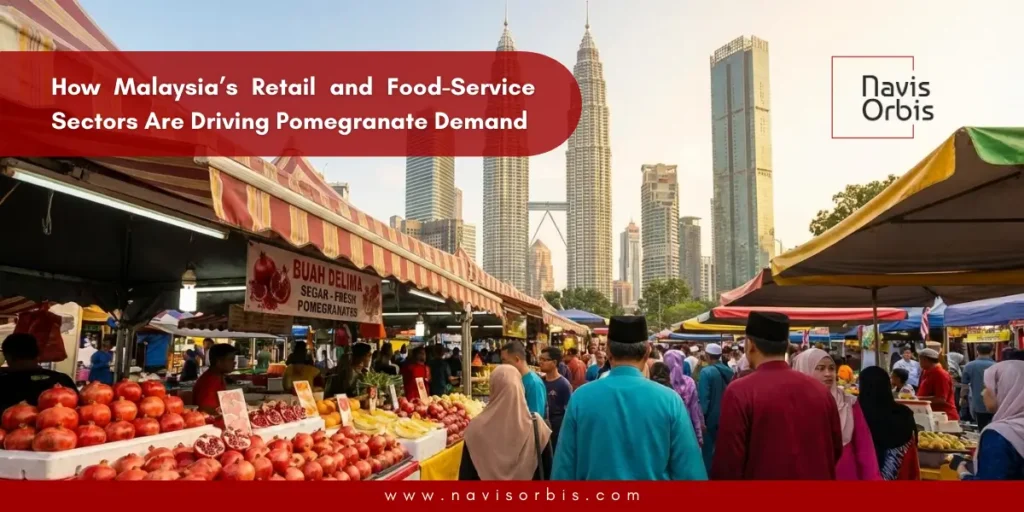
Malaysia’s fruit market has grown steadily over the past decade, fueled by increasing health awareness, urbanization, and the expansion of modern retail channels. Among imported fruits, pomegranates are emerging as a premium choice for both consumers and businesses. Their versatility, visual appeal, and health benefits make them highly desirable in retail stores, juice bars, cafés, and restaurants.
For pomegranate importers in Malaysia, understanding the key drivers of demand in both retail and food-service channels is essential for strategic planning, supply management, and maximizing profits.
This blog explores how Malaysia’s retail and food-service sectors are shaping pomegranate demand, and why Indian exporters like Navis Orbis remain a preferred choice.
Retail Sector: Supermarkets, Hypermarkets, and Grocery Stores
Retail channels play a pivotal role in pomegranate consumption in Malaysia. Supermarkets, hypermarkets, and grocery chains provide widespread access to fresh produce year-round, making imported fruits more visible and accessible to urban consumers.
Several factors are driving retail demand for pomegranates:
- Visual appeal and quality: Consumers are attracted to bright, juicy pomegranates with uniform size and well-formed arils.
- Health-conscious buying: With increasing awareness of antioxidants and natural nutrients, pomegranates are often added to weekly shopping baskets.
- Premium positioning: Indian pomegranates meet quality standards suitable for both mid-range and premium retail shelves.
- Variety and packaging: Ready-to-eat packs and pre-sorted pomegranate arils are gaining popularity, increasing convenience for busy shoppers.
Retailers benefit from sourcing Indian pomegranates because of their longer shelf life, reducing wastage and allowing for extended display periods. For importers, this translates to stable demand and predictable replenishment cycles.
Food-Service Sector: Juice Bars, Cafés, Restaurants, and Catering
The Malaysian food-service sector is a growing consumer of imported pomegranates. Juice bars, cafés, restaurants, hotels, and catering businesses increasingly use pomegranates in beverages, dishes, and desserts.
Key drivers include:
- Fresh juices and smoothies: Pomegranate juice is highly sought after in health-focused establishments.
- Gourmet dishes and desserts: Arils are used as toppings for salads, desserts, and specialty beverages.
- Health-focused menus: Many cafés and restaurants are promoting antioxidant-rich and immune-boosting ingredients.
- Event catering: Hotels and catering companies use pomegranates for high-volume orders during weddings, corporate events, and festivals.
Meeting the exact specifications of food-service buyers requires consistent fruit size, color, and juiciness. Experienced Indian pomegranate exporters ensure these standards are met, making supply seamless for Malaysian businesses.
Impact on Overall Pomegranate Demand
The growth of both retail and food-service sectors is driving a notable increase in pomegranate imports.
- Retail demand ensures steady sales through supermarkets and grocery chains.
- Food-service demand adds bulk purchases for juice bars, cafés, and restaurants.
- Combined effect: Importers must manage seasonal fluctuations and align supply to multiple distribution channels.
Indian pomegranates are particularly suited for this dual demand because they provide consistent quality, attractive appearance, and longer shelf life, making them highly reliable for Malaysian buyers.
Role of Experienced Indian Exporters
Working with experienced exporters like Navis Orbis offers significant advantages for Malaysian importers:
- Grading and sorting: Fruits are carefully graded to meet both retail and food-service specifications.
- Protective packaging: Ensures freshness during long-distance transport.
- Reliable supply: Bulk and regular orders are supported throughout the season.
- Communication and logistics: Exporters coordinate delivery schedules, documentation, and quality control to avoid delays.
This ensures that importers can confidently supply fresh pomegranates to supermarkets, juice bars, cafés, and hotels, building trust with both consumers and business clients.
Opportunities for Malaysian Importers
Malaysian importers can leverage the growth of retail and food-service sectors by:
- Segmenting supply: Allocate pomegranates for retail and bulk food-service separately for better planning.
- Marketing collaborations: Partner with retailers and cafés to promote pomegranates as a healthy, premium fruit.
- Inventory optimization: Use the long shelf life of Indian pomegranates to reduce waste and improve profitability.
- Diversifying channels: Serve both small retail clients and large food-service establishments to maximize market reach.
These strategies allow importers to capitalize on growing demand while maintaining consistent quality and customer satisfaction.
Conclusion
Malaysia’s expanding retail and food-service sectors are key drivers of pomegranate demand, creating opportunities for both importers and distributors. Indian pomegranates continue to be a trusted source due to their quality, freshness, and reliable supply.
Importers who understand the needs of these sectors and partner with experienced exporters like Navis Orbis can ensure seamless supply to supermarkets, juice bars, cafés, restaurants, and hotels while maximizing profitability.
By focusing on both retail and food-service channels, Malaysian buyers can stay ahead of market demand and build long-term relationships with clients across multiple sectors.