
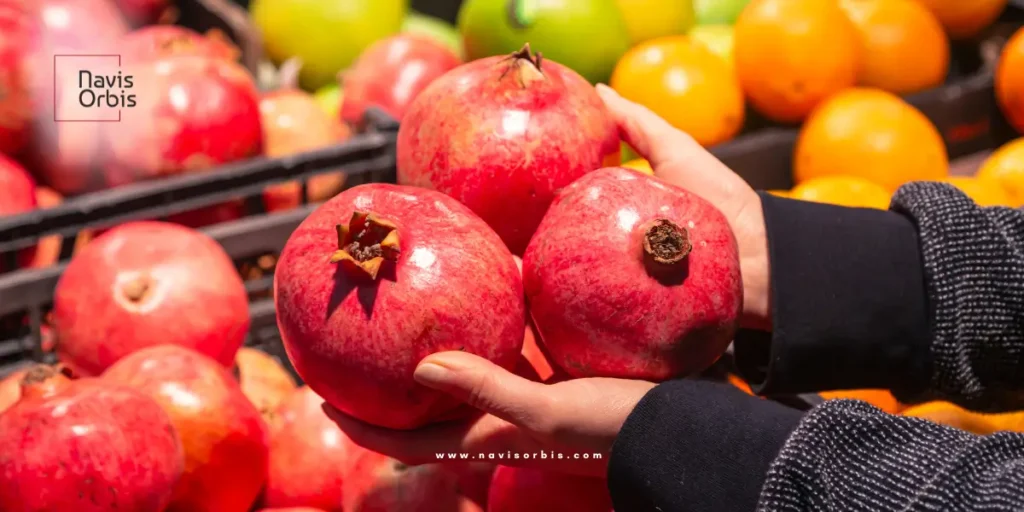
India is one of the world’s leading exporters of pomegranates, known for producing premium varieties like Bhagwa that are highly valued in international markets. However, for importers, one of the biggest challenges is ensuring consistent quality before placing bulk orders.
If you’re planning to import pomegranates from India in 2026, understanding how to identify premium quality fruit is essential. This guide will help you evaluate pomegranates based on appearance, taste, grading, packaging, and export standards—so you can make confident buying decisions.
Why Quality Check Matters in Pomegranate Import
Importing fruits is not just about price—it’s about:
- Shelf life during transit
- Customer satisfaction
- Market reputation
- Minimizing losses due to spoilage
Even a small compromise in quality can lead to:
- Shipment rejection
- Financial loss
- Damaged business relationships
That’s why professional exporters like Navis Orbis follow strict quality control measures before shipping.
1. Check the Variety – Bhagwa is Premium
The first step is understanding the variety.
✔ Most Exported Variety:
- Bhagwa Pomegranate
- Deep red color
- Soft seeds
- High sweetness
- Long shelf life
❗ Avoid:
- Mixed or unknown varieties
- Low-color or pale fruits
Always confirm the variety in your export contract.
2. External Appearance: What to Look For
The outer look of the fruit gives the first indication of quality.
✔ Premium Quality Indicators:
- Bright, uniform red color
- Smooth and firm skin
- Slight natural gloss
- Medium to large size
❌ Reject If You See:
- Cracks or splits
- Black spots or fungal marks
- Dull or faded color
- Wrinkled skin (sign of dehydration)
A visually appealing fruit has higher resale value in international markets.
3. Weight & Density: Heavier is Better
A high-quality pomegranate should feel heavy for its size.
Why it matters:
- Indicates more juice content
- Better aril (seed) development
- Fresher fruit
Quick Tip:
Pick two fruits of similar size—the heavier one is usually superior.
4. Internal Quality (Arils Check)
If possible, request sample cutting or inspection reports.
✔ What Premium Arils Look Like:
- Deep red, ruby-colored seeds
- Juicy and plump
- Uniform size
❌ Poor Quality Signs:
- Pale pink or white seeds
- Dry or shriveled arils
- Uneven ripening
Color and juiciness directly impact buyer satisfaction.
5. Taste Profile: Sweetness vs Acidity
Taste is a key factor, especially for premium markets like UAE and Europe.
✔ Ideal Taste:
- High sweetness (Brix level 15–18+)
- Low acidity
- Rich flavor
Ask Exporter For:
- Brix level report
- Taste profile details
Premium buyers prefer sweeter varieties with consistent flavor.
6. Size Grading Standards
Export-quality pomegranates are sorted by size.
Common Export Grades:
- Size 250g–300g
- Size 300g–400g (premium segment)
- Size 400g+ (high-end market)
Why Grading Matters:
- Uniform packaging
- Better presentation
- Easier pricing
Always confirm size grading before shipment.
7. Packaging Quality
Packaging plays a crucial role in maintaining fruit quality during transit.
✔ Good Packaging Includes:
- Strong corrugated boxes
- Proper ventilation holes
- Fruit cushioning (foam/net)
- Moisture-resistant lining
❌ Poor Packaging Leads To:
- Bruising
- Rotting
- Weight loss
Exporters like Navis Orbis use international-standard packaging to ensure safe delivery.
8. Cold Chain & Storage Conditions
Maintaining temperature is critical for freshness.
✔ Ideal Conditions:
- Storage temperature: 5°C to 7°C
- Controlled humidity
- Pre-cooling before shipment
Why It Matters:
- Extends shelf life up to 6–8 weeks
- Prevents fungal growth
- Maintains fruit firmness
Always ask if the exporter follows cold chain logistics.
9. Certifications & Export Compliance
Make sure your exporter complies with international standards.
✔ Important Certifications:
- APEDA registration
- Phytosanitary certificate
- Global GAP (optional but valuable)
- FSSAI compliance
Documents You Should Check:
- Packing list
- Invoice
- Certificate of origin
Proper documentation ensures smooth customs clearance.
10. Request Samples Before Bulk Order
Never finalize a deal without checking samples.
✔ What to Evaluate in Samples:
- Size and color consistency
- Taste and sweetness
- Packaging quality
This reduces risk and builds trust with your supplier.
11. Supplier Reliability & Transparency
Choosing the right exporter is as important as checking the fruit.
✔ A Reliable Exporter Will:
- Share real images/videos
- Provide inspection reports
- Maintain transparent communication
- Offer consistent quality
Working with trusted exporters like Navis Orbis ensures long-term business success.
Common Mistakes Importers Should Avoid
- Choosing lowest price over quality
- Skipping sample checks
- Ignoring packaging standards
- Not verifying certifications
- Working with unverified suppliers
Conclusion
Importing premium pomegranates from India can be highly profitable—but only if you ensure strict quality checks before shipment.
From selecting the right variety to verifying packaging, storage, and certifications, every step plays a vital role in delivering high-quality fruit to your market.
By following this guide, importers can reduce risks, improve customer satisfaction, and build strong supply partnerships.
Looking for Premium Indian Pomegranate Exporter?
Partner with Navis Orbis for:
✔ Export-quality Bhagwa pomegranates
✔ Strict quality control
✔ International-standard packaging
✔ Reliable global shipping
Contact us today to get the best quality pomegranates for your market.